
VISIT OUR INTERPRETIVE WALKS

How to find the walks
With the support of Noosa Council we have provided two short sign-posted interpretive walks where you can learn more about the flora and fauna of the dunes as you walk to the ocean.
The first of the walks is at Beach Access 47 leading from the car park at Tasman Trespasser Park off Tristania Drive, Marcus Beach. It has a companion walk about 700 m south, at Peregian Creek Beach Access 49. You can reach this by walking along the beach, or by following Tristania Drive southwards and continuing along the walking path at the end of Callitris Crescent.
Both walks have informative leaflets available and signs which highlight various points of interest.
Marcus Beach brochure
Copies of this leaflet are available from the dispenser near the start of the walk at beach access 47.
Peregian Creek brochure
Copies of this leaflet are available from the dispenser near the start of the walk at beach access 49.
What to expect on the walks
You’ll have the opportunity to learn more about the fragile local ecological communities found along Noosa’s Eastern beaches. Coastal dunes build up when sand deposited on the beach by wave action is blown inland and stabilised by vegetation. The dunes grow when seas are calm, and are eroded when wave action is more intense.
The dunes in this area consist of a relatively thin layer of white sand, deposited from about 5 thousand years ago overlying darker sand (often hardened into “coffee rock”) which was laid down about 100 thousand years ago. As sea levels rise over the coming years, these dunes will be threatened by increased erosion.
An online journey across the dunes
The dunes along Noosa’s Eastern beaches are more than just sand; they are the heart of our local water cycle and home to a biodiverse range of flora and fauna. Acting as a giant natural sponge, these dunes capture, store, and filter rainwater in vast underground aquifers. This hidden reserve is the lifeblood of our coastal ecosystem, feeding our wetlands and creeks year-round.
Scroll on to journey across the dunes to the ocean.
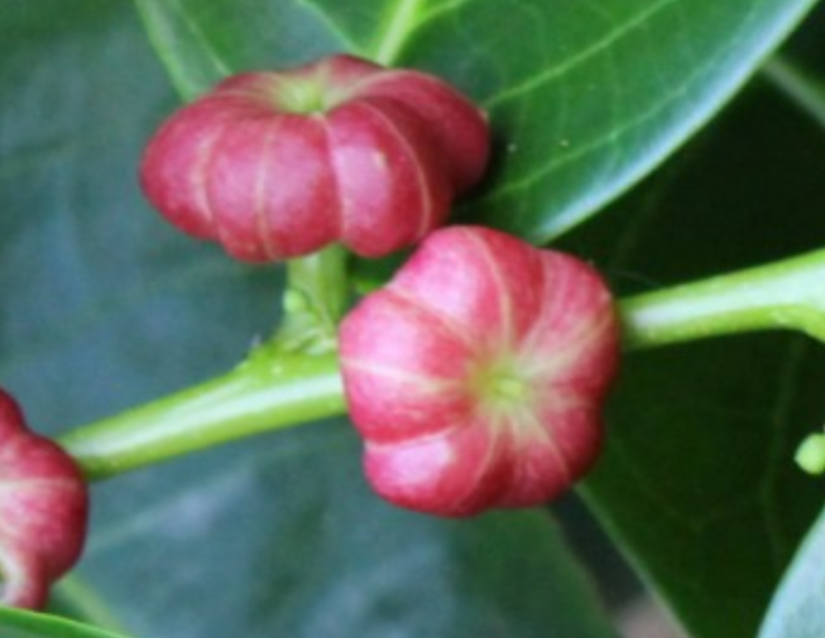
On the ocean side of David Low Way the hind dunes are home to a mixture of hard-leaved plants such as the Coastal Banksia and soft-leaved plants such as the Cheese Tree. The Cheese Tree gets its name from the shape of its fruit.
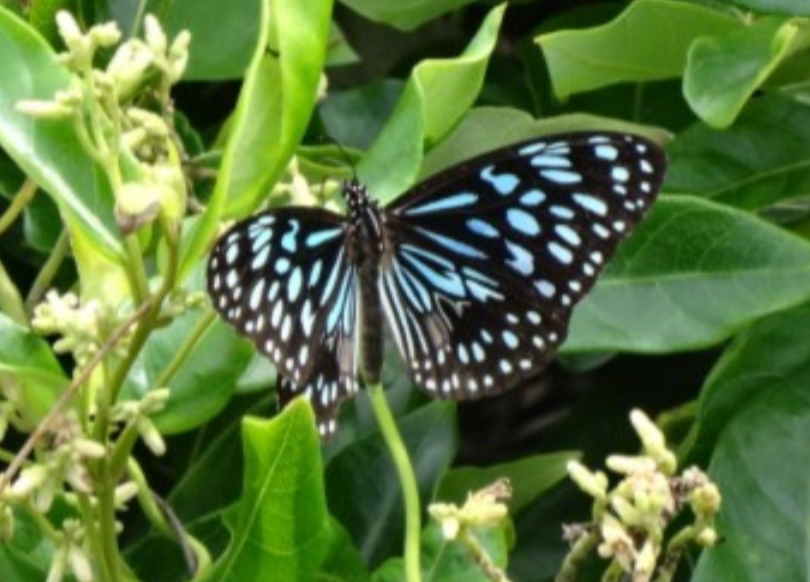
Remnants of fragile rainforest exist in the swale that dips amongst the hind dunes. Aerial roots and buttressed main roots of the Port Jackson Fig can be seen in places. The top branches are often burned off by salty winds. In the branches of Broad-leaved Paperbarks Monkey Vine grows, which is important to the Blue Tiger butterfly.
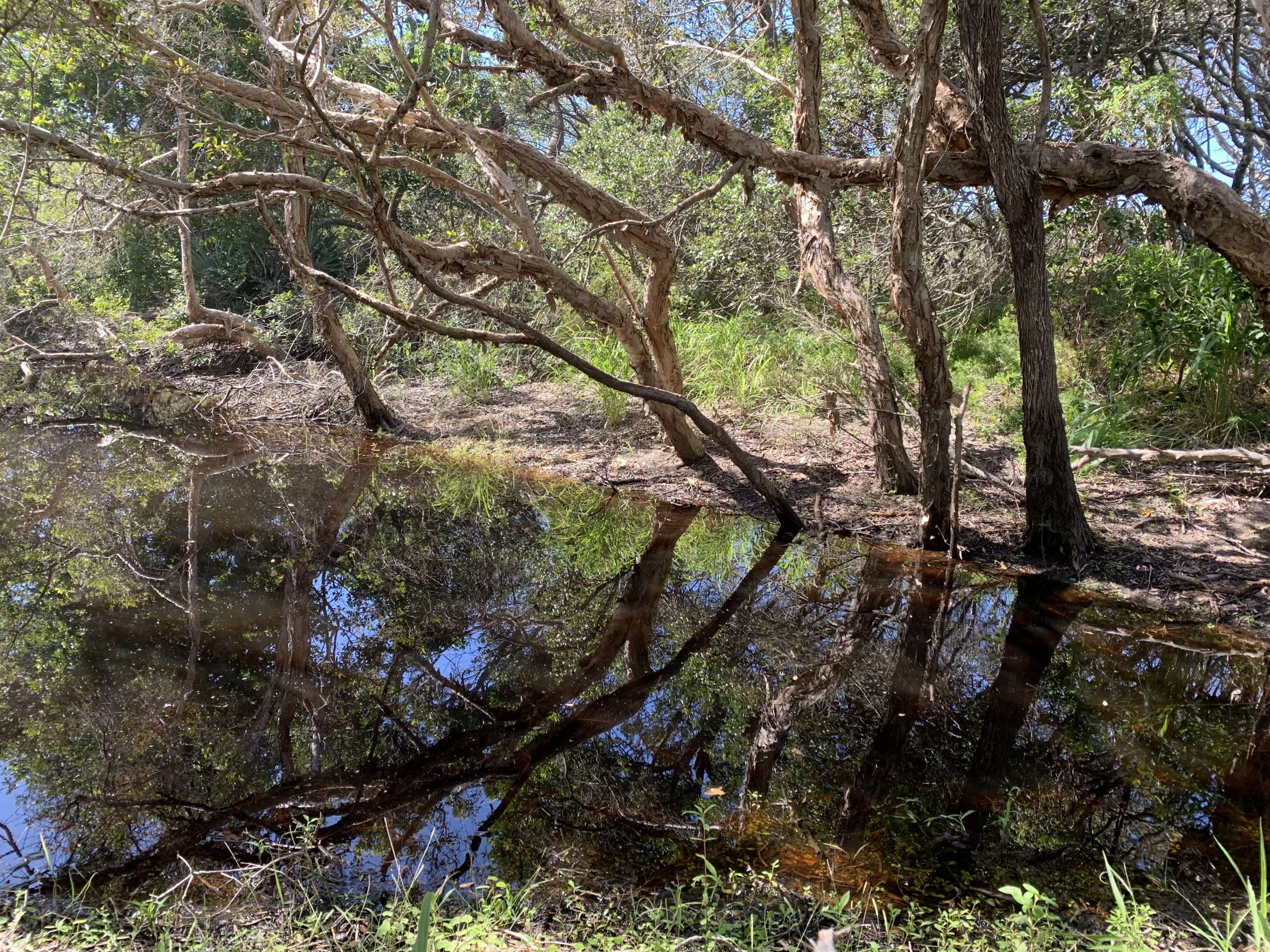
The water in the creek and moist soils on its banks enable a rich diversity of species from reeds and sedges within the creek to paperbarks and Climbing Maidenhair ferns on the banks.
Many animals rely on these freshwater refuges for breeding, feeding and shelter.
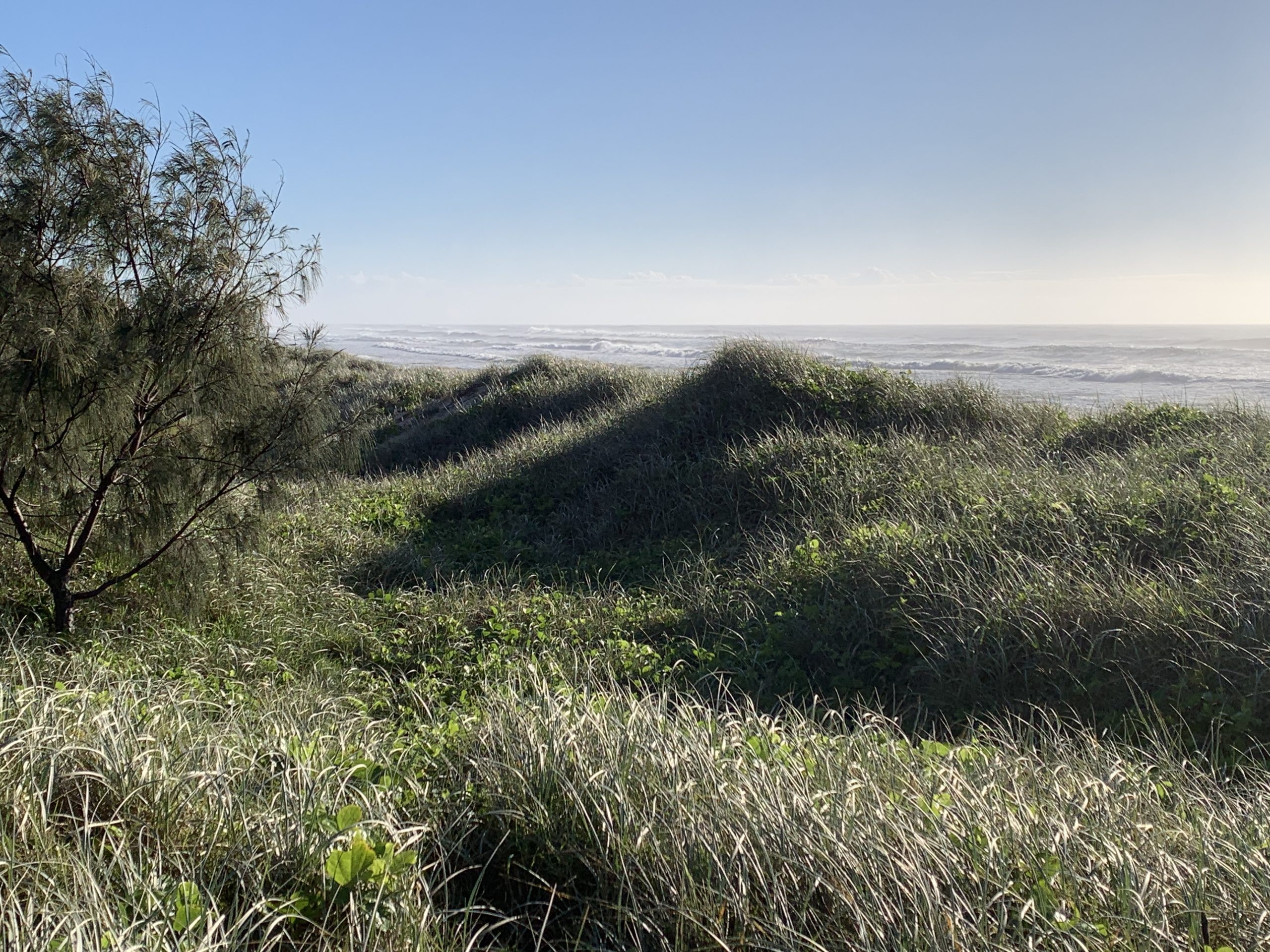
Close to the eroded face of the foredune plants must tolerate the full force of the ocean and the ever-moving sand. Plants such as Goat’s Foot Convolvulus and Beach Spinifex can survive here because they have trailing stems that can survive being buried. Spinifex extends from the incipient dune, where it binds the sand to the swale behind the foredune.
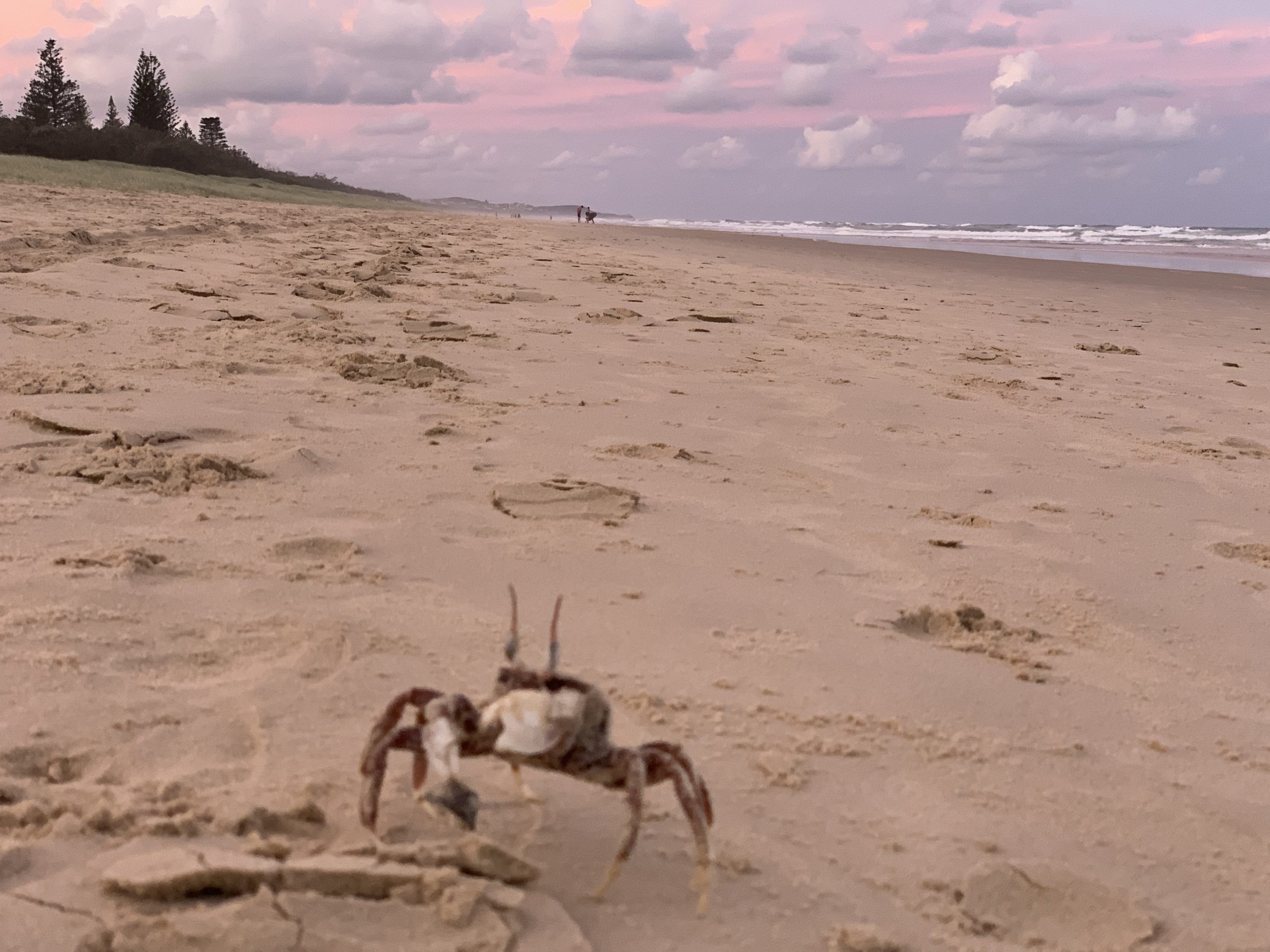
Reaching the beach, ospreys and sea eagles circle overhead whilst ghost crabs scurry across the sand and dive into their holes. Every summer green and loggerhead turtles nest in the dunes leaving their young to hatch about 60 days later and make their way to the ocean.

Beyond these dunes lies the ocean — but its health begins here on land. Every weed removed and every native plant restored by bushcare volunteers helps protect the dunes, filter water, reduce erosion and keep our coastline resilient for the sea beyond.